


AI Leadership: The Missing Human Piece in the Puzzle of Artificial Intelligence Integration By Liu Liu – LIC Board Member Imagine a world where you can effortlessly analyze data, generate creative content, and design products, all with the help of artificial intelligence. This is the reality for many nowadays. They even have a new name for themselves, called solopreneurs. They have seamlessly integrated AI into their workflows, achieving remarkable efficiency. They use AI from analyzing customer sentiment in social media posts to generating content drafts for his blog to creating mockups based on his design descriptions. Similarly, companies are also utilizing AI for more sophisticated tasks and at a much larger scale. The prevailing assumption is that unlocking the power of AI lies in mastering its technical intricacies. But what if the key lies not in the technology itself, but in our ability to lead and collaborate with it? “AI leadership” is, I believe the missing piece in the puzzle of successful AI integration. Beyond Tools: Reframing Our Relationship with AI Here is a thought-provoking analogy: instead of viewing AI as a mere tool, consider it as a group of highly capable, yet inexperienced, graduates ready to learn and contribute. This reframing shifts the focus from simply using AI to effectively guiding and leading it. Imagine being entrusted with a team of brilliant interns, each with specialized knowledge. For example, you might have an intern who excels at researching and summarizing complex data reports, another skilled in generating different creative writing styles based on your prompts, and a third adept at translating your design ideas into various visual formats. However, these interns lack practical experience. To enable their success, you need to equip them with clear instructions, break down complex tasks, provide constructive feedback, and foster collaboration. This, in essence, is the essence of AI leadership. The True Test: Can You Lead Your AI Team? The ability to lead an “AI team” becomes the true test of our readiness for the AI era. Can you clearly define goals, delegate tasks effectively, and provide constructive feedback to your AI assistants? Can you manage their interactions and ensure they are working towards a common objective? For instance, you might need to: ● Clearly define the desired outcome for your AI-powered content creation tool, specifying the target audience, tone of voice, and desired length. ● Break down the design process into smaller steps for your AI design assistant, outlining the initial concept, desired style elements, and preferred color palettes. ● Provide constructive feedback on the AI-generated report summary, highlighting key insights and suggesting areas for further exploration. ● Monitor the interactions between your AI tools to ensure they are producing consistent outputs or encountering compatibility issues. Humans at the Helm: Leading the AI Revolution I am highly skeptical of the notion of AI replacing humans. Instead, I would argue that even with its advancements, AI will always require human leadership for decision-making and judgment. The analogy further highlights that while AI’s immortality might seem advantageous, it is humans, who bear the responsibility for actions and consequences. This inherent human trait and our capacity for creativity and emotional intelligence become our defining advantage in the AI era. Embracing the Challenge of AI Leadership As we move forward, the real challenge lies not just in understanding AI technology but in cultivating the crucial skill of “AI leadership” This involves embracing AI as a partner, a team, not just a tool, and developing the ability to lead, guide, and collaborate effectively in a world increasingly shaped by artificial intelligence. By honing these skills, we can unlock the true potential of AI and chart a course for a successful human-AI partnership.

Leading with Energy: A New Leadership Paradigm
Leading with Energy: A New Leadership Paradigm By Dr. Cornelia Kawann Energetic Leadership – What’s That? I am quite sure, you know those moments when life throws you a curveball, and you’re left wondering, “How on earth am I going to handle this?” I had such a moment five years ago, when every morning felt like a struggle. The alarm blared, and I dragged myself out of bed, feeling more exhausted than when I’d hit the sheets the night before. My days were a blur of obligations – corporate meetings, parenting duties and organizing our family activities, household chores, visiting family and friends – all while trying to maintain some semblance of balance in my life. And then came this very special moment in my life, when I woke up on a Saturday morning and knew: I don’t want to continue like this. I knew I had to change something in my life. I just didn’t know what and how. After some research I found the solution: I discovered, that as with everybody, my time is limited to 24 hours, whereas my energy isn’t! This changed everything in my life! I realized that I needed to increase my personal energy in order to increase my productivity, my efficiency and the way how I lead myself and others. Hence, I experimented with my energy and developed Energy Tools that gave me all the energy I needed; not only at work but also in my private life. I experienced how much easier many things get, when you do them in a different and smart way with the right energy. The concept of Energetic Leadership was born! So what does this mean? Imagine being that you are a person radiating energy who not only faces challenges head-on but inspires everyone around you to do the same. That’s what being an Energetic Leader is all about – overcoming obstacles with a spark in your eye, guiding others with your passion, and leading with purpose in every step you take. Because today, you need different approaches to make a difference! Why Is Energetic Leadership Important Now? There has been a bit of a crisis lately. Pandemics, war, energy shortages, supply bottlenecks, rising prices, higher interest rates and rising inflation are still dominating the agenda. In these fast changing and unpredictable times, traditional leadership models may fall short and not work anymore the way they worked before. In the era of artificial intelligence, new technologies, and evolving work environments personal values and security have once again become an important issue. Hence the question is: How can leadership define and incorporate the principle of continuous change, flexibility and adaptation? What does it take to offer people both security and a sense of purpose at work in times of crisis? It is an essential factor, how a leader deals with crises and change. Therefore, the changes and challenges we face—whether in business or our personal lives—require a fresh perspective. Why Leading With Energy Matters In times of uncertainty and more and more artificial intelligence it becomes important that people FEEL who you are and what you stand for. People want to FEEL you and your ENERGY. Hence, the simple solution is: Lead with your Energy! But what does this mean to lead with your energy? It is actually quite simple. Let me introduce the four pillars of Energetic Leadership to you: First Pillar: Radiate energy and optimism and cultivate a positive and empowering atmosphere. Use your passion to drive meaningful change and create a vibrant, thriving environment. By creating a sense of excitement and possibility you motivate people around you to strive for excellence. Second Pillar: Focus on collaboration and teamwork by recognizing the value of diversity and inclusivity. Encourage open communication and foster an environment where every voice is heard, respected, and valued. Third Pillar: Foster a culture of continuous learning, personal growth, and empower others to contribute their unique talents and perspectives towards common goals. Discovering their personal energy and passion will give them a greater level of fulfillment and satisfaction in both their professional and personal lives. Fourth Pillar: Use special Energy Tools that helps you to sustain and maintain your personal energy to increase your productivity and efficiency. This means not only to recharge your own energy on a continuous basis, but also to use your energy for making powerful and sustainable decisions. Your unique personal energy makes you to stand out of the crowd. In summary, Energetic Leadership is a transformative approach to leadership that harnesses the power of your personal energy, passion, and collaboration to inspire and empower others, drive meaningful change, and create a culture of excellence and growth by using different energetic methods. Implementing Energetic Leadership in Your Life Introducing Energetic Leadership into your life is akin to unlocking a hidden reservoir of personal power and potential. It begins with a fundamental shift in mindset – a recognition that your energy, both internal and external, plays a pivotal role in shaping your experiences and interactions. In order to become an Energetic Leader consider the following aspects to shift and include in your (business) life: a. Self-Awareness Assess and be aware of your current energy levels. Are you drained or energized? Reflect on how your energy impacts others and the overall dynamics within your team or organization and learn how to recharge your energy. Prioritize your self-care – but not only on your physical level with sleep, nutrition and exercise, but also your mental, emotional and spiritual energy. b. Purpose and Vision Define your purpose by asking yourself: What impact do I want to make? Knowing your why and having a clear mission is so powerful. Your purpose fuels your energy! Visualize what you want to achieve and articulate a vision that inspires and excites others. Envision your success because your energy aligns with your vision and propels you and your goals forward. c. Authenticity and Positivity Be aware who you are, what your values are and what you stand for. Authenticity radiates positive energy and creates trust. Choose positivity and create a supportive and inclusive

Beyond the Camel Ride: Cultivating an Open Mind for Cultural Dive
Beyond the Camel Ride: Cultivating an Open Mind for Cultural Diversity By Liu Liu – LIC Board Member I love this photo of me riding a camel in Rajasthan, India when I visited India for the first time back in 2007. Since then I have been to India many times. The camel I rode belonged to a caravan owner, it is the way local people traveled across the desert, and it is not for the tourists. The organization I worked with was working with the local communities to install water pumps for the local community. For me, it is important to have a deep cultural experience as the local people and try to see things through their perspective and feel their way of living as much as possible. Riding a camel is a symbol of my open and learning mindset towards a different culture, without pre-perception, without judgment and genuinely wanting to learn and understand. Breaking Free from the “My Way or the Highway” Mentality When we are faced with cultural diversity, it is very natural to feel my way is the “right way” and “only way” of doing things, and other approaches and methods are just not as good. In the study of culture, there is a term for that, it is called ethnocentrism, meaning “to apply one’s own culture or ethnicity as a frame of reference to judge other cultures, practices, behaviors, beliefs, and people, instead of using the standards of the particular culture involved.” This kind of judgment is often negative. In one episode of the Deep Culture Podcast, Emre Seven and Joseph Shaules from the Japan Intercultural Institute explore what brain and mind sciences can tell us about ethnocentrism, how it is a learned experience, and how it can lead to being judgemental towards other cultures and cultural practice and lead to a closed mindset towards a different culture. Embracing Differences Another area that can test a person’s mindset towards cultural diversity is what people eat and how people eat in different cultures. In China, Japan, Korea, and Taiwan people use chopsticks, and in the UK, USA, and Europe people use a knife and fork. There are different norms in different regions when it comes to chopsticks, and so is the way people use knives and forks. Of course, there are people in Thailand, Laos, and some southeast countries who use spoon and fork, plus chopsticks. It is also on this first trip to India, I learned to eat with my hand. I carefully observed my Indian colleagues how to use their fingers to mix the rice with the curry, roll it into a small ball in their hand, and gently push it into the moth without the food running out of their hands and going all over their clothes. Later on in my travel, I learned that people in the Middle East and West Africa people eat rice with their hands very differently from how Indian does. Now I want to ask you if you can learn and master the way how local people eat in different countries without judging, or are you someone who carries your own travel knife and fork wherever you go? A World of Flavors (Literally!) When it comes to what people eat and drink, alcohol and nonalcoholic is another story. Over the years, I drank chai in India, Bangladesh, and Pakistan eucalyptus tea in South Chad, millet milk in Burkina Faso, fresh coffee made with cardamom and fresh ginger in Dhafar, Sudan, and I am fortunate that I had them not in hotel, but in people’s home and villages. What would you do if you were invited to have a meal and the dish is rehydrated okra with goat stew? The texture is like glue warmed up. We’ve all been there – feeling like our way is the “right” way. That’s ethnocentrism in action! But cultural diversity is a global spice rack, not a bland one-size-fits-all. Here are some tips to help you to spice things up in a good way. Do’s and Don’ts for an Open Cultural Mindset: Do: ● Be a Student: Approach each culture with a desire to learn. Ask questions (respectfully) and observe how locals interact. ● Embrace New Experiences: Step outside your comfort zone. Try new foods, even if they seem unusual. ● Practice Empathy: See the world through others’ eyes. What are their customs, traditions, and values? Don’t: ● Judge: Remember, different doesn’t mean wrong. ● Assume You Know Best: Avoid imposing your own cultural norms on others. ● Be Afraid to Fail: Trying (and maybe fumbling) to eat with chopsticks is part of the learning process. So, the next time you’re offered rehydrated okra with goat stew, take a deep breath and dig in! It might become your new favorite dish (or not!), but the experience will undoubtedly broaden your horizons. Remember, traveling to and living in a different culture is a privilege and honor to be welcomed in by the local people, and is a transformative journey, not the destination. Embrace the adventure and let cultural diversity enrich your life!

How Intercultural Communication Works and Why it is Important
Leadership and Growth – How Intercultural Communication Works and Why it is Important By Indira Bunic – LIC Board Member Intercultural communication is the call on the transformative symphony of leadership For any effective global leader, under them lies a complex web of narratives, experiences, and conversations that stretch across the breadth of the world’s tapestry. Having negotiated the rapids of leadership for over thirty years, I have seen and been part of the changes that go into leading in a world without borders. I found that the key lay not just in speaking the same language but in understanding the symphony of different cultural melodies. This is the crux of intercultural communication in leadership. The Vital Pulse of Today’s Leadership Now, imagine a world where leaders listen not to respond with words but with the intent to understand. Where rich, diverse perspectives are sought after and recognized as the most valuable resource. This is not a utopian dream but a stark necessity in today’s globalized business environment. It is here that the entire concept of cross-cultural and intercultural communication assumes immense importance. The Essence of Intercultural Communication Imagine a world where the border is invisible, and the culture gets mixed; the market becomes a mosaic of global voices. That isn’t from the land of imagination but a pulsating reality within the globalization that characterizes the existing workforce. Central to this interwoven reality is a skill, subtle yet powerful, known as intercultural communication. Such efforts of intercultural communication will be the golden key to leaders amidst this diversity for the organization’s growth. Intercultural communication goes way above just the exchange of words among different cultures in different languages; it is a form of art that needs to be understood, appreciated, and capitalized on. Intercultural Communication – Privilege and Responsibility In this context, leadership morphs into a role both a privilege and a responsibility. The effective leader becomes a cultural bridge-builder endowed with sensitivity, empathy, and unyielding adaptability. This leader fosters an environment where every voice is heard and valued, employing cultural competence training and inclusive decision-making to cultivate mutual respect. This approach not only enriches the organizational culture but also propels it forward. Why Intercultural Communication Matters for Growth Consider the tale of a multinational corporation that turned cultural diversity into its strategic advantage, driving innovation through the roof. Through leadership committed to deep cultural understanding, this organization embraced training programs, diverse team-building activities, and a culture of inclusivity. The result? A dramatic increase in market reach, employee satisfaction, talent attraction, and a melting pot of ideas that set the stage for groundbreaking innovations. The link between authentic intercultural communication and organizational growth is undeniable. The Transformative Impact of Intercultural Mastery Mastering intercultural communication transforms leaders from mere managers of people and projects into architects of global understanding. Embracing cultural diversity opens up a world of fresh perspectives, ideas, and solutions, propelling innovation and competitive advantage. It’s about building bridges within teams and with partners and clients worldwide, fostering strong, collaborative relationships that are the backbone of global success. It’s about creating spaces where different cultural backgrounds are not just tolerated but indeed celebrated, where the diversity of thought leads to innovation, and where mutual respect fosters an environment of collective growth. The ripple effect of such leadership is profound, leading to organizations that are more agile, innovative, and capable of navigating the global market with finesse. Embracing the Labyrinth of Challenges of Intercultural Communication But, just like any great adventure, there will be bumps on the road. Language barriers, different cultural practices, and unconscious biases may bring about misunderstandings, conflicts, or poor team dynamics. The intercultural communication labyrinth is very subtly the labyrinth. It requests that leaders learn not only passively about the intercultural differences of their surroundings but also actively adapt. Therefore, the quest for intercultural competence is a lifelong quest that leaves room for nothing less than humility, curiosity, gratitude, and respect for the other, combined with sober self-commitment and institutional commitment. Building Bridges, Not Walls When leaders show active listening, curiosity, and flexibility, they can create a bridge between people from different cultures. It takes effort, but it’s worth it to connect and appreciate diverse perspectives. Another main factor will be integrating intercultural communication training in leadership development programs. It will embrace more than the basic knowledge of cultural issues into learning pragmatic approaches, which should empower a person to understand better and substantially lessen the communication barriers. Be able to listen to understand, listen to pay attention, and give respect and appreciation to their perspectives without looking to agree with them or convert them to their line of thinking. The other diverse perspective, therefore, signifies that one can often come up with innovative solutions, reveal any blind spots, or create a more engaging and productive workforce easily. Therefore, intercultural communication fuels growth by encouraging improved innovation and problem-solving while building trust, commitment, passion, and loyalty. Global Perspectives and the Voices of Wisdom Compared to the hubs of multinational corporate, to the bustling startup ecosystems, communication across different cultures forms one of the many key aspects that leadership in the globalized business landscape is expected to assimilate. Here are some ways by which Erin Meyer, author of “The Culture Map,” and Jeanne Brett, a top researcher on negotiations and cultures, shared some ways of effectively handling cross-cultural interactions. Their research underlines that cultural intelligence, or the ability to behave skillfully in an intercultural context, has become a critical competency of 21st-century leadership. This is self-awareness of the cultural conditioning, learning of value systems and norms of other cultures, and flexibility in adapting communication manners. Real-life cases and concrete frameworks that leaders need to bridge cultural divides, build inclusive teamwork, and use diversity as a strategic business advantage. Insights that bridge leaders between the cultural barriers, building trust, and driving innovation from the synergy of diverse perspectives. It’s during these unprecedented times of connectivity that cultural agility becomes very important. The difference is felt in leadership—a mediocre leader transformed into one

How Cultural Bias Influences AI
How Cultural Bias Influences AI: From Smiling Samurai to Glamorous Aid Workers By Liu Liu – LIC Board Member Have you ever thought “My culture is the best“? It’s natural! In the study of culture, this is called ethnocentric, it’s natural. It means “having or based on the idea that your group or culture is better or important than others”. However, this cultural bias can influence AI in surprising ways. But How Cultural Bias Influences AI? You might ask. Let’s use AI image generation as an example to explore how. Imagine searching for “cultural diversity” images using AI. You might expect a global mix of people. But what if the results are mostly young people in modern Western clothes? This reflects a bias in the AI’s training data. In another experiment, AI was asked to generate some group photos of the historical people. The first one is the samurai warriors of Japan. Look at them, what a lovely bunch! Considering the fact that they were either about to go into or just came back from bloody battles, they looked a bit too happy. Don’t you think? In the same experiment, this is the AI-generated American Indian. All happy and smiley as well. How far from the truth are these AI-generated photos? In the real archive photos of Japanese samurai warriors and American Indians. All of the AI-generated group photos in this experiment have this so-called “American smile” because this is how the American interpretation of what facial expression people ought to have when having their group photo taken. Image from https://medium.com/@socialcreature/ai-and-the-american-smile-76d23a0fbfaf In 2015 Kuba Krys, a researcher at the Polish Academy of Sciences, studied the reactions of more than 5,000 people from 44 cultures to a series of photographs of smiling and unsmiling men and women of different races. Their study shows that different cultures interpret smiling very differently. In some countries, smiling can be interpreted as friendly, and confident; and in other cultures, it can be seen as dishonest and not taking things seriously, especially in public places and important events. But if the AI dataset is selected and trained by people from cultures who see smiles as positive, then you will have such images where everyone smiles. Another example: AI-generated images of humanitarian workers resemble Indiana Jones and Lara Croft – glamorous and charming. In reality, aid workers come from diverse backgrounds and may not look like action movie stars. So, how can AI be “intelligent” yet biased? The answer lies in the word “artificial”. There are two meanings to the word “artificial”. The first meaning is “made or produced by human beings rather than occurring naturally, especially as a copy of something natural”. The second meaning is “(of a person or their behavior) insincere or affected”. Put into the context of AI, this means AI is produced by and affected by humans and reflects or amplifies the cultural and other types of biases humans have. To reduce such cultural bias influence on AI, we need to first work on the cultural bias we have as humans, taking practical steps to continue to improve the AI systems to make them less culturally biased and more fair. Here are some useful steps to take. ● Be aware of our own biases. We all have them! ● Use diverse and representative data. Train AI on a global range of cultures. ● Test for bias. Regularly audit AI systems to identify and remove bias. ● Build transparency. Explain how AI works and why it makes certain decisions. ● Assemble inclusive teams. Developers from diverse backgrounds can create fairer AI. ● Develop ethical guidelines. Ensure AI is used responsibly and avoids discrimination. ● Seek input from diverse stakeholders. Get feedback from a wide range of cultures. Ultimately, we want to create an AI where every culture is equally and fairly represented. We can create AI that celebrates cultural diversity and promotes inclusion by working together.

Leading Global Virtual Teams: Strategies for Success
Leading Global Virtual Teams: Strategies for Success By Luiza Dreasher, Ph.D. Leading teams with members across borders has become commonplace in today’s global economy. These diverse teams have been found to be more creative and innovative, and the different perspectives of team members enable companies to significantly expand their market reach. However, managing global teams (GT) also presents challenges due to factors such as differing communication styles, relational dynamics, and different attitudes toward deadlines. In addition, some members might hesitate to participate in meetings due to concerns about language accents, while others might struggle to understand the conversation entirely. These factors can, indeed, make it difficult to mold the group into an efficient working unit. Technological advancements such as video conferencing, email, instant messaging, project management software, and various online platforms have enabled these teams to operate virtually. Global Virtual Teams (GVTs), in essence, are groups of individuals located in different geographical areas, collaborating on the same project or working toward a common goal. The Many Challenges of Global Virtual Teams (GVTs) and How to Overcome Them GVTs have their own set of unique challenges. A complicating factor is the need for team interaction through conference calls where the added advantage of face-to-face communication is removed. In fact, while team members may be sharing the same platform while working on the same project, one cannot overlook the fact that members will bring diverse characteristics such as different attitudes toward deadlines, different interpretations of effective leadership, different communication styles, and likely, different levels of language proficiency. Because of the complexity of working with people who come from various cultures and have different value orientations, all while using technology to communicate, the failure rate of such teams can be high. In fact, research shows that more than 50% of GTs fail to meet their full potential. So, leaders need to address the challenges such teams face head-on to create a productive team environment that transcends physical boundaries. Below are some of the biggest challenges team leaders need to overcome to ensure the success of their GVTs. 1) Leaders must be prepared to address differences in language proficiency and communication styles. Language proficiency is one of the biggest obstacles to a GVT. Given that English is the most common language used in global business interactions, non-native speakers will have to depend on their proficiency level to express their ideas in a clear manner. Unless they are extremely proficient, expressing thoughts in English will not only impact their confidence but also limit their contribution. Paying attention to the power dynamics in the group is also important. Team members with a higher language proficiency will be more articulate and persuasive and, therefore, have more power in the group than those with a lower proficiency level. It is also important to consider the many differences in communication styles. Direct communicators such as U.S.-Americans can be seen as rude and insensitive because of their more direct style. Leaders also need to understand that efforts to use humor to create a more lighthearted, informal environment may backfire. That is because humor rarely crosses boundaries. In fact, when used in emails or other forms of communication they can be interpreted as insulting, culturally insensitive, and even cruel. 2) Leaders must recognize the pressing need for establishing relationships despite the physical distance. There is no denying that it is much easier to establish relationships when individuals see each other more frequently. In high-relationship cultures, members prefer establishing a relationship first and avoiding working with total strangers. This is harder to accomplish given the distance between team members in GVTs. GVT leaders need to use different strategies to foster relationship-building and overcome the challenges posed by distance and lack of face-to-face interaction. For example, having regular and structured virtual meetings will help maintain consistent communication and create opportunities for team members to interact more frequently. Don’t limit these meetings to formal, business-related elements such as project updates. It is equally important to organize informal gatherings such as virtual coffee breaks where team members can chat about non-work topics. This helps recreate the casual interactions that occur naturally in a physical office. Leaders should also encourage the use of video during meetings to make interactions more personal and engaging. Video calls help convey non-verbal cues and create a sense of presence. They can also encourage the use of instant messaging platforms like Slack or Microsoft Teams for real-time, quick communication. This can help replicate the spontaneous, informal exchanges that happen in a traditional office setting. The key is for leaders to help team members establish strong relationships despite the physical distance. This can lead to improved collaboration and increased team performance. Whatever strategies they use, team leaders must be mindful of cultural differences as well as time zones when scheduling meetings and choosing communication tools. Above all, ensure that all team members feel included and respected. 3) Leaders must understand that decision-making varies a great deal across cultures. Reaching workable decisions is another difficult aspect of teams working across cultures, especially virtually. That is because many cultural dimensions influence decision-making. In more egalitarian societies such as the United States, Canada, or Australia, team members participate fully in the decision-making process. They often speak freely and express their honest opinions, even if they disagree with the team leader. Once a decision is agreed upon, the team is then responsible for executing it. In more hierarchical societies such as China, Japan, or Mexico, members expect the leaders to make decisions. In fact, a leader who seeks input or leaves decisions up to team members would be seen as weak and risk losing face with team members. So, it is important to remember that, in a meeting, certain team members will defer their decisions to the most senior person in the room, even if they are capable of participating in the process. 4) Leaders must be prepared to overcome logistical challenges. Global companies face significant logistical challenges due to time zone differences, which can complicate coordination and
Businesses and Inclusion Under a New Labour Government
Businesses and Inclusion Under a New Labour Government Diversity and Inclusion (D&I) have gone beyond just being a trendy term to become a key element in today’s business world. Fueled by a growing emphasis on social responsibility and a shift in government regulations, fostering an inclusive workplace is no longer a “nice to have” but a strategic imperative. This blog explores the changing world of Diversity and Inclusion, exploring the challenges and opportunities it presents, and equipping businesses with actionable strategies to navigate this new era. The Changing Landscape – A Call for Accountability The winds of change are blowing across the business world, particularly concerning D&I. The new Labour government is ushering in an era of heightened accountability, with stricter regulations and reporting requirements on the horizon. This translates to increased scrutiny for businesses in areas like: 1. Compliance and Transparency Businesses will be expected to demonstrate their commitment to D&I through comprehensive reporting that showcases their policies, practices, and impact on diversity metrics. 2. Enhanced Worker Rights New legislation will likely expand worker rights and strengthen equality laws, ensuring workplaces are fair and inclusive for all employees. 3. Building a Future-Fit Workforce The future of work demands a diverse and inclusive workforce. Companies that cultivate inclusive cultures will be better positioned to attract and retain top talent, particularly among younger generations who prioritise D&I when choosing employers. The Disconnect – Rhetoric vs. Reality Despite recognising the value of D&I, a disconnect exists between rhetoric and reality. Research by the London Intercultural Center (LIC) indicates that while a majority of businesses and workers appreciate the importance of inclusion, translating good intentions into actionable strategies remains a challenge. The Compelling Business Case for Inclusion The case for inclusion goes far beyond compliance. It is a powerful driver of business success, supported by a wealth of evidence. Here’s why prioritising D&I benefits your company: 1. Enhanced Innovation and Problem-Solving Diverse teams bring a wider range of perspectives to the table, fostering creativity and innovation. This leads to a richer pool of ideas and more effective solutions to complex problems. 2. Improved Decision-Making When diverse voices are heard and valued, businesses are better equipped to make informed decisions that consider a broader range of viewpoints and market segments. 3. Increased Employee Engagement and Retention Inclusive workplaces foster a sense of belonging and psychological safety for employees, leading to higher engagement, satisfaction, and reduced turnover. This translates to significant cost savings associated with recruitment and training. 4. Enhanced Brand Reputation and Customer Loyalty Consumers are increasingly drawn to brands that champion diversity and inclusion. A strong reputation for D&I attracts loyal customers and strengthens brand image, creating a competitive advantage. 5. Attracting and Retaining Top Talent In today’s competitive talent market, D&I is a key differentiator. Younger generations, in particular, value working in inclusive environments. Businesses with strong D&I practices are better positioned to attract and retain top talent. Quantifiable Benefits of D&I Research underscores the financial benefits of D&I. A McKinsey study found that companies with diverse leadership teams were 25% more likely to outperform industry averages on profitability. Additionally, a study by Deloitte found that companies with inclusive cultures experience a 19% increase in revenue growth. Turning Challenges into Opportunities – Practical Tools for Success The new era of D&I accountability might seem daunting, but it presents a unique opportunity for businesses to gain a competitive edge. Here are some actionable strategies to navigate these changes and foster a truly inclusive work environment: Conduct Regular D&I Audits Regularly assess your D&I policies and practices to identify areas for improvement. These audits should encompass factors like recruitment, talent management, and promotion opportunities. Invest in D&I Training Provide comprehensive training programs that educate employees about the importance of D&I and equip them with the skills to foster an inclusive workplace. This includes unconscious bias training, microaggression awareness, and bystander intervention techniques. Embrace Transparency and Reporting Develop robust reporting mechanisms to track and communicate your D&I efforts and outcomes. Transparency demonstrates accountability and builds trust with employees, stakeholders, and customers. Empower Employee Resource Groups (ERGs) ERGs are employee-led groups focused on addressing the needs of specific demographics within the organisation. Provide support and resources to these groups, allowing them to advocate for their communities and contribute to overall D&I initiatives. Leverage Technology for Inclusion Utilise technology to support D&I initiatives. This could include anonymous reporting systems for employees to voice concerns, diversity analytics platforms to identify and address potential biases in recruitment and promotion, and inclusive recruitment software to attract a wider pool of qualified candidates. Continuous Improvement is Key Building an inclusive culture is an ongoing journey, not a destination. It requires a commitment to continuous improvement and a willingness. Lets work together for a better, more productive work environment.
Why Diversity and Inclusion In Leadership Matters
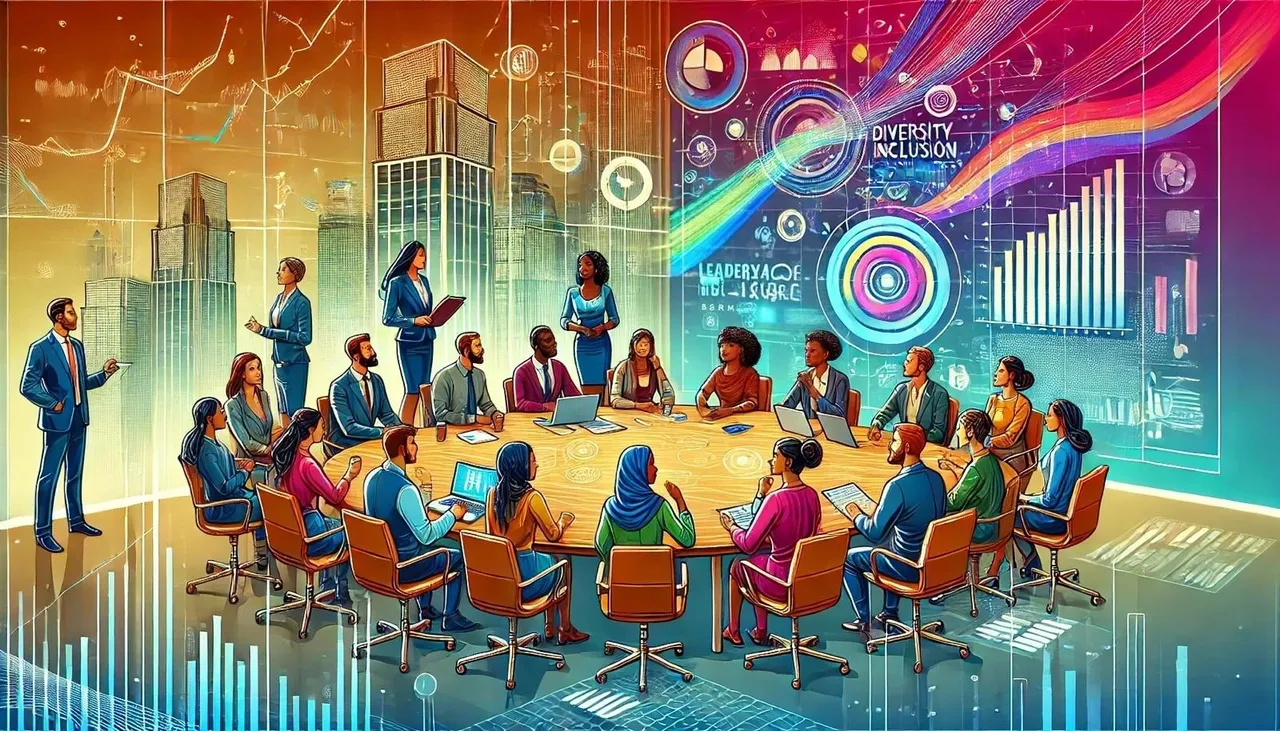
Why Diversity and Inclusion In Leadership Matters By Indira Bunic – LIC Board Member Have you ever thought, Is diversity and inclusion in leadership the same, and why Diversity and Inclusion in Leadership matters? Has it ever been one of those things that we worry about as leaders because diversity and inclusion in leadership are important? Also, the terms are often used interchangeably. They are related but quite not synonymous. Therefore, thinking about growing and fostering innovation in our organizations, we must understand the difference between diversity and inclusion. Let’s get into the basic meaning. What is Diversity? Diversity implies differences. It’s a concept that recognizes various elements within a given setting. It’s almost like that brilliant tapestry woven with bright threads of race, gender, age, sexual orientation, physical ability, ethnicity, and many more threads to create a rich and complex whole. This variety could be multiple backgrounds, perspectives, and experiences, all combined to create the richness of the tapestry. In a workspace, dynamic diversity weaves in multiple outlooks and experiences, creating fertile ground for creativity and innovation. What is Inclusion? Inclusion is about creating an environment where all these contrasting elements come together positively. It means creating a work environment where everyone can feel respected, accepted, heard, and valued. It is a practice of ensuring that all, despite their diverse backgrounds, are open to identical vacancies and resources. It involves embracing and leveraging these differences to elevate the performance and culture of the organization to a standard where every voice can be heard and valued. It is not one picture out of the difference; it is the celebration and merging thereof into a plus-enhanced value. Instead, it should be made into a space where all those differences are welcome, respected, and valued. Rather, it is all about ensuring that every other team member feels like they belong and have power. Diversity and Inclusion are Critical Components For example, did you know that companies with diverse executive teams are 33% more likely to outperform their peers in terms of profitability? Diversity and inclusion are important and imperative in the current global marketplace. This is reflected in the retention rate and the enhancement of financial performance. Let’s, for instance, explore the McKinsey report that indicates companies within the top quartile for racial and ethnic diversity are 35% more likely to have financial returns above their respective national industry medians. It is by diversity that different views come in, making it easier for innovation to take place, while inclusion is to ensure that such views are respected and used. In other words, it would lead to more informed decisions and build a good reputation for the company. D&I is not just another box that must be ticked; it is a strategic imperative with tangible benefits. Diverse teams necessarily become innovative because they bring different perspectives. More so, an inclusive culture gives team members a sense of belonging, a feeling that everyone is most valued and empowered to give their best, which likely results in high engagement and productivity. In the long term, committed companies find attracting and retaining the best talent easier. Again, a diverse team will mean a wide understanding of different markets and customer bases, enabling wide and effective strategies to build on business growth. Interface and Connectedness Between Diversity and Inclusion Understanding the subtle yet powerful interface and interconnectedness of diversity and inclusion is key for any organization to achieve sustained success. Diversity represents the composition of a workforce that derives from various backgrounds, perspectives, and experiences. Inclusion is the environment that pulls these diverse individuals into a context where they will thrive, contribute, and grow. And how do they converge? Enriched Merged Value of Diversity and Inclusion The “what” of diversity is mostly about demographic differences, including age, gender, race, ethnicity, sexual orientation, disability, socioeconomic background, and more. Diverse workforces clearly represent the capacity of a firm. An organization can benefit from an enriched array of experiences and perspectives. Core to the notion of diversity is the acknowledgment of these individual differences, the premise of which allows an organization to have enriched collective capabilities. Inclusion, on the other hand, is the “how.” It speaks to how you approach an environment of work where individuals have to feel respected, accepted, and valued for who they are and what they bring to the organization. Behaviors are how we relate to one another, the practices that allow each team member to be welcomed and fully able to participate, and each voice to be heard and considered in making decisions. Interconnectedness and Leveraging of the Synergy Between Diversity and Inclusion Research has shown that diversity and inclusion are positive influencers of organizational change, creativity drivers, and decision-making enhancement. They also lead to increased employee engagement, better understanding of customers and markets, and enhanced resilience and adaptability. Commitment to diversity and inclusion is more than an ethically right thing to do; it is a strategic advantage. It promotes innovation and creativity because different perspectives result in distinctively novel solutions. It leads to better decision-making from an all-round perspective, and organizations that have diversity at their core always attract the best in the market, thereby improving public image. In addition, diverse teams serve to understand and cater for the needs of the customer across the board, thereby improving market coverage and business growth. Diversity & Inclusion Challenges The process of coordinating successful Diversity and Inclusion (D&I) initiatives worldwide is extremely complicated. Balancing universal D&I principles with local culture and expectations poses a significant challenge for organizations. Balancing all of this with the myriad legal systems around the world is no small feat, and these different frameworks can massively affect how D&I progress gets rolled out in a business. In one country, a policy could be progressive, and in another, it is compliance only – whilst across the border into an entirely separate state (in this case, Croatia to Hungary), that same document may even technically breach local [legal] requirements. Above and beyond, one

How Multicultural is London
How Multicultural is London Written by Nicole Farid – LIC Board Member Around 8.8 million people live in London, which had overall growth since 2011 of 6.7%. This growth was strongest in East London which saw an increase of 10%. North, South and West London also had sizeable population increases of 5.6%, 6.5% and 7.5% respectively, but Central London only increased by 0.3%. Central London has the highest level of population density with 10,936 people per km2, which is almost twice the level of London overall. Still, London overall is 15 times more dense than the rest of England, with 5,596 and 371 people per km2 respectively. Interestingly to start with how diverse London is did you know over 41% of Londoners are not actually born in the UK? This puts into perspective already just how diverse London is. A Culinary Kaleidoscope Growing up in this wonderful city it was always known that there were pockets of culture scattered around London. Let’s take food as an example it’s thought there are over 18,000 restaurants in London and a significant portion of these are of international cuisine. For example if you would like Turkish food you can find Istanbul like grill houses in north London, polish pirogi in Ealing, the finest Indian curries in Southall, delicious dim sum in China town, a juicy jollof rice in south London and the finest grilled middle eastern cuisine in the west. Just doing a quick search on google maps of your local high street will display the array of culinary diversity available locally regardless of where in the city you live. London’s areas with the highest population of originally English British people reside in the following three areas; Richmond upon Thames, Kingston upon Thames and Bromley and yet even these areas show you mostly international cuisine. Of course fish and chips, cottage pie and the Sunday roast are also highly appreciated and highly associated with the fine British Culture! Cultural Festivals and Diversity Moving on to other aspects of culture such as art, cultural festivals, multicultural education, language diversity and museums to name a few. Festivals such as Notting Hill Carnival, Diwali on the Square, Chinese New Year celebrations and Africa on the Square ensure a rich tapestry of multicultural diversity every year in the city. The Notting Hill Carnival alone attracts hundreds of thousands of global attendees annually and is thought to be one of the world’s largest festivals. Multicultural Education Let’s have a look at Education, something very personal to parents and many are keen to find ways to pass their cultural traditions to their kids outside of the home too which need not be a challenge when in London. London’s multiple foreign curriculum and traditional schools can help support this. Some examples of available education are Wen Lin Chinese school London, Lycée Français Charles de Gaulle de Londres, The Japanese School London and the American School London just to name a few. Not to mention out of the UKs 150 universities over 40 of them reside in the capital with thousands of international students attending bringing their culture with them as many universities offer clubs and societies for students to celebrate their cultures. Museums: Windows to World Cultures If you still need persuasion that London is a truly multicultural city you only need a visit to a few of the multiple museums that contain incredible artifacts from around the world such as the Rosetta Stone or Samurai armor and a recent addition of “Luxury and Power: Persia to Greece”. Through the display of 160 objects displayed at the British Museum. without getting too deep into history it’s so easy to learn so much about ancient cultures with just a day out to the museum in London! Last but not least there is the aspect of language with over 300 languages spoken on a daily basis in one city leaves you to realize just how multicultural London really is! Surely this article by now should give you just a minuscule idea of the richness of culture available to us here in London, if your reading this from abroad then yes take it as yet another tourist guide on why a trip to London is totally worth and highly encouraged!