


Receiving a foreign delegation:
practical DOS, DON’TS, and where to
find them
Recently I’ve hosted workshops for an American company, currently going through a process of integration with a Cyprus-based company.
One of the American participants approached me after a workshop with a pretty curious question: “I am receiving two colleagues from Cyprus next week.Could you give me some cultural do’s and don’ts that will help me not offend them?”
The workshops I conducted were not focused on any particular culture, so I was really excited to help her shape her expectations before the visit. Here are the tips I gave:
1. Focus on researching your colleagues, find out about their formative culture
At the company I worked with, the situation with the origin of the employees was actually quite complicated.
Particularly, many employees living in Cyprus were actually born and raised in Slavic cultures, such as Russia, Belarus, Ukraine.
To find out about the formative cultures of your colleagues, you can try researching their LinkedIn profiles. Maybe they used to work at a different company, which is clearly from another country, or went to university in another country.
If you see that your delegation is completely, say, Belarusian, that it makes sense to search for Belarus culture tips.
If you are looking for practical tips on any culture, be sure to visit The Cultural Atlas – an Australian project that collects and shares insights about most countries of the world.
2. Remember that your good intentions will be visible
Working with a mixed team is a completely different story. You will have to research multiple cultures, and you’ll have to try to work out which traditions and behavioural patterns will satisfy all the parties.
If you feel swamped by information, remember this: the fact that you understand your colleagues are from a different culture, and you’re trying to adjust to that, makes you more culturally sensitive than 90% of people.
If you really put in effort into altering your behaviour to match the cultural expectations, this will surely be visible to your colleagues, and they will appreciate it.
3. Be mindful about expats
If someone has lived and worked in a different culture for a very long time, chances are their international lifestyle has polished off their original cultural specificities.
With expats you are unlikely to see too many differences in their behaviour that are culturally explained. However, the communication patterns might be much more deeply-rooted.
It takes a lot of mental effort and conscious work to change them. So even living in a different culture for a long time might not influence them too much.
Still, behavioural differences, like greetings, eating, physical interactions, shouldn’t cause issues when it comes to expats.
4. Try to ask more questions
No matter how well you prepare for our delegation, there will still be various issues you can encounter in the form of individual differences your colleagues will have.
How to solve them? Easy – just ask. For example, find out when they would like to have lunch, at what time they usually have a break, how comfortable they are with hugging, and all other possible nuances.
Not only will this alleviate all the remaining possible issues, but it will also make your counterparts feel accommodated and appreciated.
5. 3 biggest difference areas
Of course, I’m not trying to belittle or underestimate in any way the value of other areas where people’s habits and communication patterns might be different.
Still, in my experience, and my clients’ experience, the areas that cause the most confusion, are:
- Food, which means when people eat, how they eat, how long the meals are, how many meals a day they have etc.
- Physical contact, meaning touching, kissing, handshakes, and so on. You need to be especially careful here, if you interact with a person from a Muslim country, as Muslims are very strict about physical contact. Especially between different genders.
- Working hours, which stands for how many breaks people take, how long they work, etc. For example, in some cultures people are most likely to finish around 5 or 6 pm, while in others work may easily last up until 7 or 8 pm.
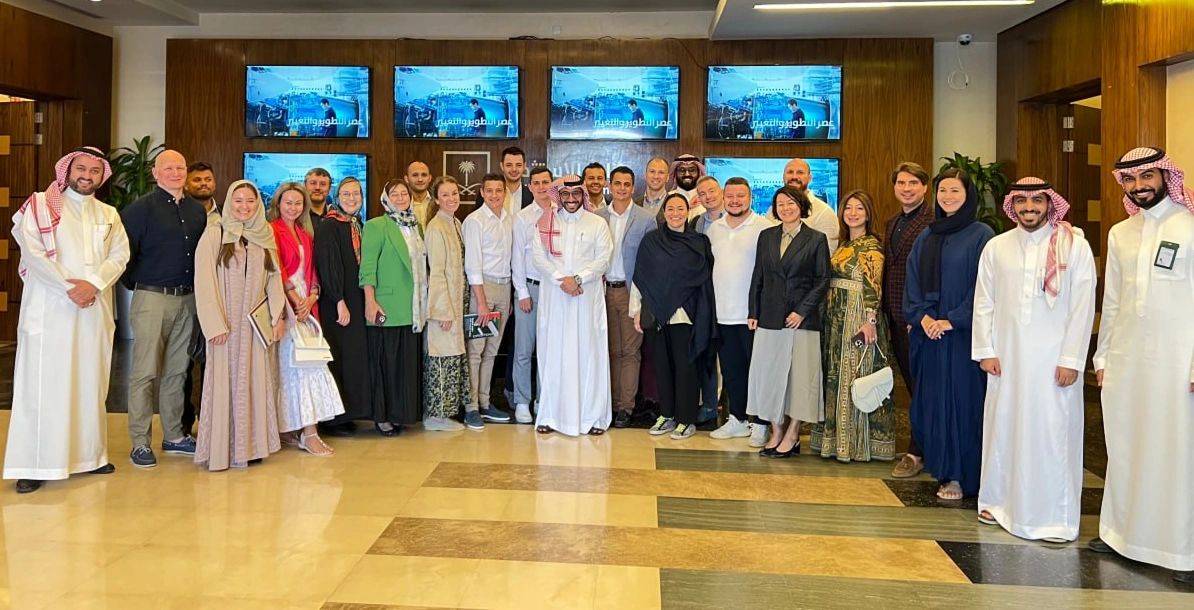
I really encourage you to keep these in mind when you prepare for the visit of your delegation. Coupled with the previous technique, these points will make your life so much easier.
Finally, I would like to leave you with one last tip: people are not just a sum of their cultures. First and foremost, they are individuals with completely unique backgrounds and experiences. So, the best way to prepare for a foreign delegation’s visit is to get to know your colleagues better.
Kristina Roppelt is an intercultural communication consultant with 10+ years of industry experience and 63 visited countries under her belt. Clients all over the world, such as Hasbro, Greenpeace, Goethe Institute and more, have sought her skills to accelerate their international development.