




What Trump’s 2024 Victory Could Mean for DEI
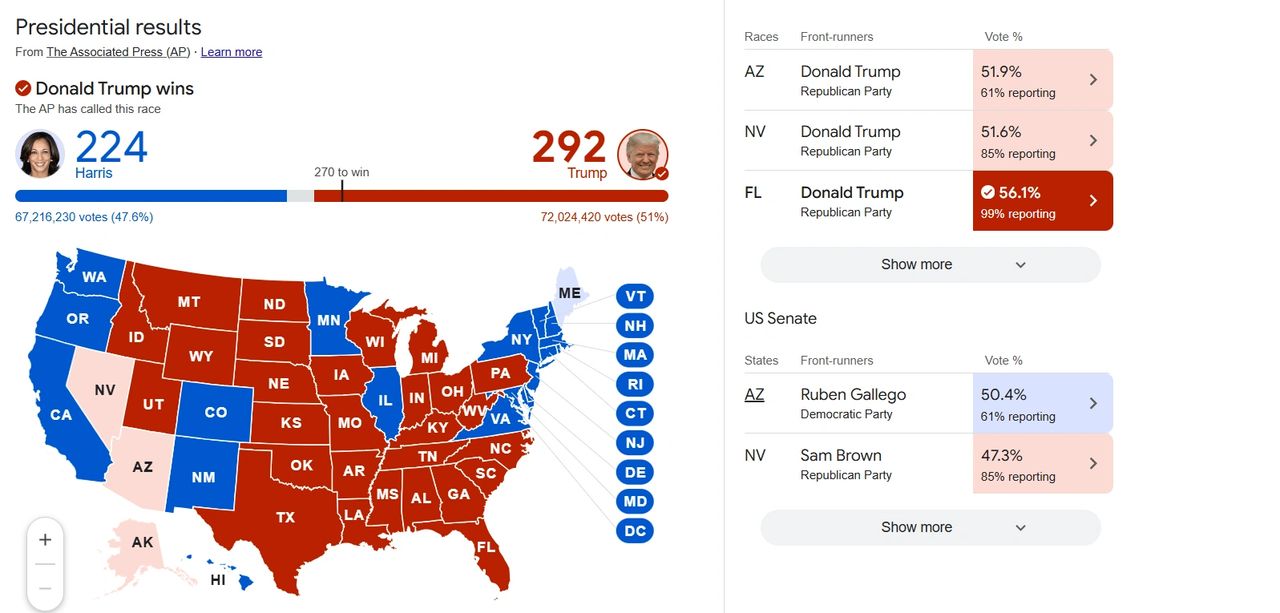
Now that Donald Trump has won the 2024 U.S. presidential election, many of us are reflecting on how his return could impact Diversity, Equity, Inclusion, and Belonging (DEIB) in corporate settings. Trump’s policies have historically taken a conservative approach, especially concerning workplace diversity initiatives. With this new term, corporations may face a shifting regulatory and cultural environment, and DEIB advocates may need to rethink their strategies. The big question is: What Trump’s 2024 Victory Could Mean for DEI?
Here’s a look at what this could mean for DEIB initiatives in corporate America and how companies might adapt.
The DEIB Approach to Training as a Policy change
During his previous administration, Trump issued executive orders limiting federal training programs that included elements of critical race theory and diversity content. There’s no reason to believe he would take a different approach now. For companies, especially federal contractors, these orders could restrict training programs addressing issues like racism or privilege, and may limit the scope of diversity initiatives. Corporate DEIB (Diversity, Equity, Inclusion, and Belonging) would take on a different meaning in terms of program orientation, structure, and who leads these initiatives.
For some companies, this could mean adopting a less visible form of DEIB. This might result in a situation where those interacting with the organization such as auditors or clients, perceive the company as promoting inclusion, while the organization itself chooses to be more discreet about it publicly. This creates a difficult balancing act: aligning with DEIB principles while operating within a framework that might seem to have a very different outlook on diversity and inclusion
2. Corporate Culture Focus and Focus on DEIB. Relevance of the Two
While the government’s inclination is rather towards the conservative, some companies may decide to adopt this new perspective and hence change their DEIB strategies. This could be something like cutting down the presence or the resources allocated to DEIB programs since there will be less federal support and assurance to go in such initiatives.
On the contrary, this may also serve as a great moment for the companies who are very much interested in DEIB transformation. And with regard to such transformation or rather DEIB as a whole, some organizations may choose to double down on their DEIB efforts during this time regardless of how the political aspect may affect the company or the economic chains. Thus, some such companies may see this as a good time to further strengthen their position and make DEIB a core part of their identity.
3. The Consequence on Hiring and Workforce Composition
There were also many repeated campaigns to reinforce immigration policy which was one of Trump’s key focus areas. This seems to be new rubrics which could impinge on diversity in corporations, more so on a global scale. There are plenty of US companies that go overseas in search for professionals who can diversify their teams with unique approaches and skill sets. Other multinationals, as we found while researching, have a tendency for outsourcing. With more intense immigration policy this may shift, with more focus being relied on the domestic markets which could lessen diversity within the workforce.
This modification might impact other industries like that of technology, research and finance where there are global upturns which are sought for progress. So, in the near future companies may find changing in sourcing strategy. perhaps focusing on diversity through local channels induction and diffusion in reproaching international representation.
4. Consumer Boycott and Reaction towards Customer Efforts in Corporate
One thing is clear that average consumers and employees want to know about the social capabilities of the organizations and their managers. On the contrary, if the company compromises the DEIB strategies because it does not fit with the socio political landscape, then it is likely to face backlash from consumers, employees, and even investors who prioritize DEIB. Many supporters inside and outside the company have started to measure the company’s values scientifically to diagnose whether the company is a genuine supporter of the employees and its community.
Consequently, this may be a dilemma for the firms. Should they just shift their DEIB emphasis in order to not incur regulatory backlash or do they go on record about their DEIB approach and invite the DEIB critics? This conflict will most probably be accompanied by the need for solutions which will allow the companies to implement DEIB policies in more politically effective manner.
5. Innovation, Creativity, and Global Competitiveness
It is already established that innovation can only be conceived in the presence of a diverse society, numerous studies have shown that teams from different backgrounds produce more innovative solutions, several scholarly works have confirmed an increase in the number of innovative solutions proffered where teams are of different backgrounds. Yet, if there are further restrictions on DEIB efforts in the workplace, we may observe a change. But certainly, the absence of DEIB efforts may lead to a more homogeneous workplace thus slowing down the pace of innovation and subsequently competitiveness in the global context.
This presents a significant risk, particularly for US firms especially in sectors that require innovation and new thinking. Over time, global markets have increasingly recognized the value of diversity. One possibility may be for such organizations to be mindful of DDIB-related beliefs but to allow them to progress in private “spaces.”

6. Adaptation and Resilience: A New Era for DEIB
Even if a Trump presidency creates new challenges for DEIB, I think these principles are fundamentally ingrained in the identity of corporate America. We don’t expect DEIB to die but rather to evolve. There may be some companies that wish to implement their DEIB strategies in a more discreet manner, such as setting up employee resource groups or internal talks that do foster diversity but do not attract too much focus.
DEIB leaders and advocates will have to think cratively given the ecosystems pain points, one scenario will be to focus on the low hanging fruits. The other option that companies could explore is working with external agencies, exercising social media, or encouraging the campaigns that are less likely to invite political rebuttal.
Conclusion: Managing DEIB in the Changing Context
There may be new hurdles with the use of resources during the Trump administration, but I have no doubt the values of DEI will be there at the very core. Corporations that consider orientating to DEIB recognize not only its social relevance, but also its utility in getting the best human resources, improvement of the company’s innovative capabilities, and devotion from customers. As changes occur in the business environment, DEIB leaders and advocates will work out means and strategies which will promote diversity and equity in the workplace to ensure it is enriched by different voices.
In brief, although DEIB is likely to face challenges in the next few years, I believe it is robust and flexible. Companies that are dedicated to diversity and belonging will be able to progress, establishing workplaces for every employee and fostering deep-rooted credibility with their communities.